

Frequently Asked Questions – Tempeh, Soy Sauce & Koji Rice
Here you'll find answers to the most common questions about our fermented products from Hamburg. From production to nutritional values, preparation, and shipping – everything you need to know to get started with tempeh, unpasteurised soy sauce, and koji rice in the kitchen.
How is tempeh made?
Tempeh is the umbrella term for a type of fermentation. Simply put, legumes are cultivated together with a beneficial mould over a set period of time – comparable to the ripening process of cheese. During this process, many nutrients are broken down, resulting in a firm, sliceable block: tempeh.
Our tempeh is handmade by us. After the ripening period, the tempeh is gently pasteurised to preserve it, vacuum-packed, labelled, and then ready for shipping or bike delivery to your door.
We love to experiment. That's why, alongside our base range, we regularly release limited tempeh editions with special extras like sesame, pumpkin seeds, sunflower seeds, hemp seed, or even cacao nibs. You can find the current limited edition in our shop.




Tempeh – Nutrition, Taste & Preparation
Tempeh is one of the most nutrient-dense plant-based protein sources there is. As a Hamburg fermentation label, we craft our tempeh by hand from regional legumes – soy-free, gluten-free quality with no additives. Here you'll find answers to the most common questions about buying, preparing, and storing tempeh.
What does tempeh taste like?
Simply delicious! Depending on the legume used, tempeh tastes a little different each time and has a different texture. Generally speaking, tempeh has a delicate, nutty-mushroomy flavour. It also takes on flavours and marinades beautifully. Feel free to get creative in the kitchen!
Which mould culture is used for tempeh?
Tempeh is made using the beneficial mould Rhizopus oligosporus. It belongs to the Mucorales family and has been a staple of Indonesian fermentation cuisine for centuries. During fermentation, the mould grows into the legumes, forms a white mycelium network, and binds the tempeh block together. At the same time, it produces enzymes that break down proteins and nutrients, making them especially easy to digest. Rhizopus oligosporus is entirely safe for humans – it's classified as a GRAS organism (Generally Recognized As Safe).
Is tempeh gluten-free?
Yes, our tempeh is gluten-free. We simply note that trace amounts of gluten may be present, as this information is passed on by the farmers. Please still always check the ingredient list on the packaging to make sure everything agrees with you.
What's the difference between tempeh and tofu?
Tempeh and tofu aren't really comparable. Tempeh has a firmer texture and a natural flavour of its own that varies depending on the legume used. It's also fermented and contains many minerals and antioxidants that benefit your microbiome. If you already cook with tofu, you can use similar preparation methods as a starting point. Tempeh is very versatile, takes on all kinds of marinades and flavours, and can be fried, baked, steamed, deep-fried, or grilled.
What's the difference between tempeh and seitan?
Seitan is made from wheat gluten and is therefore not gluten-free. Tempeh, on the other hand, is made from legumes and is gluten-free. Seitan is also high in protein but contains no fibre and isn't fermented – tempeh's nutrient density is significantly higher.
How much protein does tempeh have per 100g?
Tempeh is one of the highest-protein plant-based sources there is. Depending on the legume, tempeh contains between 17 and 22g of protein per 100g – significantly more than tofu (approx. 8g/100g) and comparable to chicken breast. It also provides all essential amino acids, making it a complete protein source.
How much fibre does tempeh have?
Alongside its protein content, tempeh is also an excellent source of fibre – with approximately 5–7g of fibre per 100g, notably more than most other protein sources. Fibre supports healthy digestion, feeds beneficial gut bacteria, and keeps you feeling full for longer. Tempeh also has a low glycaemic index (GI), meaning blood sugar rises only slowly after eating – without the typical energy spike and subsequent crash. For anyone focused on a balanced, nutrient-rich diet – whether athletic, sugar-conscious, or simply health-minded – tempeh is a particularly valuable choice.
Is tempeh good for building muscle?
Yes. Thanks to its high protein content, complete amino acid profile, and excellent bioavailability from fermentation, tempeh is superbly suited to muscle building and sports nutrition – vegan or not.
How many calories does tempeh have?
Depending on the variety, tempeh has between 170 and 200 kcal per 100g. Alongside protein, it also provides valuable fibre, iron, calcium, magnesium, and B vitamins.
How do I prepare tempeh properly?
When pan-frying tempeh, use medium heat – not full blast! We've seen things... Tempeh browns beautifully and develops its full flavour if you give it a little time. You can also steam, bake, deep-fry, or grill it. Tempeh works well in salads, as a soup topping, in wraps, curries, as a taco filling, in bakes, stir-fries, and much more. If you want something quick and easy, try deglazing the pan with a splash of soy sauce!
Can you eat tempeh raw?
Our pasteurised tempeh could technically be eaten raw, since it's already fully cooked. That said, we always recommend heating it – fried, steamed, or baked, tempeh simply tastes much better and develops its full flavour.
Can tempeh be frozen?
Yes, tempeh freezes beautifully and doesn't change in flavour. Simply freeze it in its original packaging or in a freezer bag. To thaw, place it in the fridge overnight, or go straight to the pan – frozen tempeh can also be fried directly.
Does pasteurisation destroy nutrients?
No, heating during pasteurisation only affects the probiotics (microorganisms) – unfortunately, that can't be avoided. Your tempeh still remains full of good nutrients, fibre, and minerals.
How should I store tempeh?
Tempeh must be stored in the fridge at a maximum of 7°C. It also freezes very well without changing in flavour.
Why does my tempeh have dark spots?
Dark spots on tempeh are the natural spores of the mould as it matures, and they're completely harmless. If you're ever unsure, feel free to get in touch and we'll help you out.
How long does tempeh keep?
Our pasteurised tempeh keeps in the fridge for up to 4 weeks. Frozen, it lasts 3+ months. You'll also find all storage details on the packaging.
Is there a tempeh subscription?
Yes! You can order your favourite tempeh on a monthly subscription and save 5% per product. The subscription can be paused or cancelled at any time via your customer account.
-
Chickpea Tempeh Natural
Regular price €4,30 EURRegular priceUnit price €21,50 per kg -
Black Bean Tempeh Natural
Regular price €4,30 EURRegular priceUnit price €21,50 per kg -

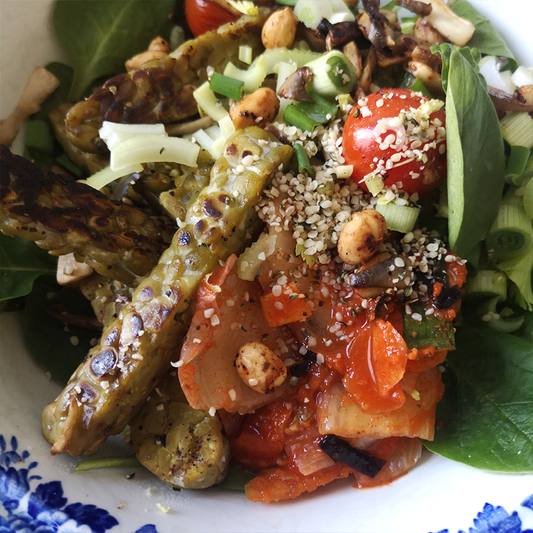 Sold out
Green Pea Tempeh Natural
Regular price €4,30 EURRegular priceUnit price €21,50 per kg -
Lazy Hack – Mediterranean
Regular price €5,00 EURRegular priceUnit price €26,32 per kg




What is unpasteurised soy sauce?
Unpasteurised – also called "live" or "raw" – soy sauce isn't heated after fermentation. This preserves the natural enzymes and microorganisms that give the flavour its particular depth and complexity. It differs fundamentally from industrially produced soy sauces, which are pasteurised and often contain additives.
Which soy sauces does Lazybean offer?
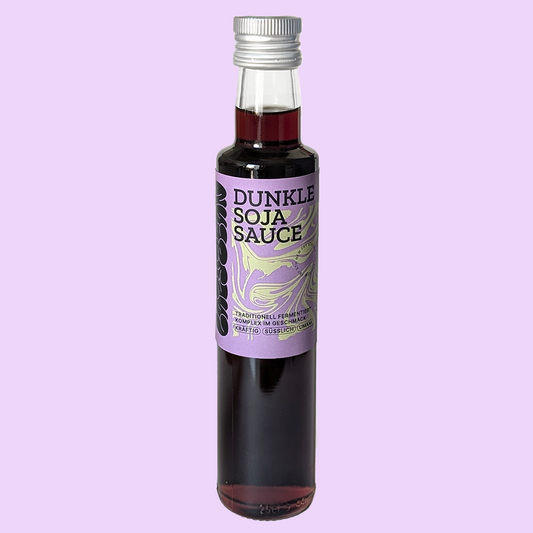
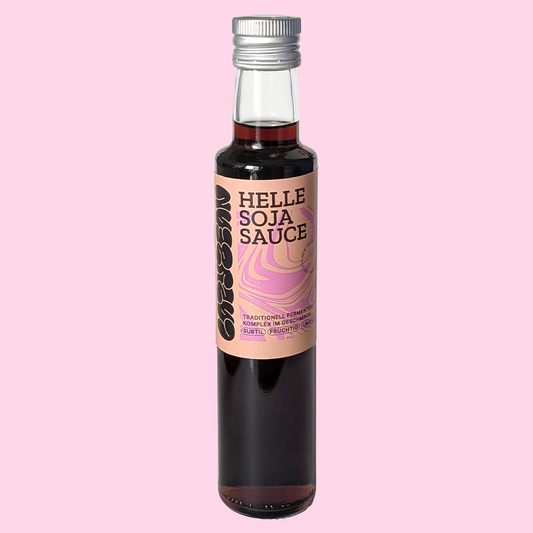
Light soy sauce and dark soy sauce – each available in 100ml and 250ml. Both are unpasteurised, traditionally fermented, and free of additives.
What's the difference between light and dark soy sauce?
Dark Soy Sauce – Bold, rounded, with a subtle natural sweetness that plays perfectly against intense umami. It works exactly where real flavour is called for – with roasted notes, hearty dishes, and anything that can handle a finish with real punch. Traditionally fermented for 12 months, handcrafted, and unpasteurised – making it especially aromatic and alive.
Light Soy Sauce – Subtle, fruity, and full of complexity, without pushing itself into the foreground. Ideal when you want to gently refine and season a dish without dominating it. Traditionally fermented, handcrafted, and unpasteurised – for a layered, lively flavour. Especially good with dressings, soups, vegetables, light dishes, tofu, and tempeh.
Does the soy sauce contain additives?
No. Our soy sauce is traditionally made from soybeans, wheat, water, and salt – good ingredients and simply time. No additives, colourings, or preservatives. Due to the wheat, it naturally contains gluten and is therefore not gluten-free.
Is the soy sauce vegan?
Yes, our soy sauce is fully vegan.
How do I store unpasteurised soy sauce?
Refrigerate after opening. Unopened, it keeps for many months when stored somewhere cool and dark. You'll find exact details on the packaging.
Does soy sauce go well with tempeh?
Perfectly – a splash of our soy sauce while pan-frying tempeh makes an immediate, noticeable difference. The combination of fermented tempeh and live soy sauce creates an intense umami experience.
-
Dark Soy Sauce 250ml
Regular price €14,90 EURRegular priceUnit price €59,60 per l -
Light Soy Sauce 250ml
Regular price €14,90 EURRegular priceUnit price €59,60 per l -
Dark Soy Sauce 100ml
Regular price €8,90 EURRegular priceUnit price €89,00 per l -
Light Soy Sauce 100ml
Regular price €8,90 EURRegular priceUnit price €89,00 per l






Buying & Using Koji Rice – Miso, Amazake, Shio Koji
Koji rice is the key ingredient in Japanese fermentation cooking – and at Lazybean, it's handcrafted and freshly available. Whether you want to make shio koji, miso, or amazake yourself: here you'll find everything you need to know about buying, storing, and using koji rice.
What is koji rice?
Koji rice is steamed rice cultivated with the beneficial mould Aspergillus oryzae – "koji" for short. The mould produces enzymes that break down starch and proteins, creating intense umami flavours. Koji is the foundation of many traditional Japanese and Asian foods such as miso, sake, mirin, amazake, and shio koji.
What is Aspergillus oryzae?
Aspergillus oryzae is a beneficial mould that has been used in Asian cuisine for thousands of years. It's considered one of the world's most important fermentation organisms and is behind a wide range of staple ingredients: miso, soy sauce, sake, mirin, amazake, and many more. The mould is entirely safe for humans and is used deliberately for its enzymatic power.
What can I use koji rice for?
Koji rice is incredibly versatile:
- Shio Koji – koji rice mixed with salt and water makes a universal marinade that tenderises meat, fish, and vegetables while adding an intense umami flavour.
- Amazake – a naturally sweet, fermented rice drink with no alcohol, full of nutrients and natural sweetness.
- Miso – fermented together with soybeans and salt, koji rice becomes miso paste.
- Sake & Mirin – koji is the starting point for making Japanese sake and mirin at home.
- Garum & Umami Pastes – koji rice can be fermented with meat, fish, or vegetables into intense seasoning pastes.
How long does shio koji need to ferment?
Shio koji (koji rice + salt + water) takes about 7–10 days to ferment at room temperature – stir once a day. In the fridge, it takes 2–3 weeks, giving a milder, more refined flavour. Finished shio koji keeps in the fridge for several months.
When marinating: fish needs 1–2 hours, poultry 4–8 hours, and red meat is best left overnight. The longer it sits, the more tender and flavourful the result.
What's the difference between koji rice and regular rice?
Koji rice has been cultivated with the mould Aspergillus oryzae, which grows into the rice and fundamentally changes its chemical composition. Visually, koji rice is recognisable by the whitish, powdery mycelium coating the grains. Regular rice has none of these enzymatic properties.
Is koji rice vegan and gluten-free?
Yes to both. Koji rice consists only of rice and the koji mould – it's naturally vegan and gluten-free.
Do I need special equipment for koji rice?
For simple applications like shio koji or amazake, you don't need any special equipment – just a clean jar, salt, and a bit of patience. For more involved projects like miso or sake, controlled temperature is helpful, for example using a simple styrofoam box or a rice cooker with a keep-warm function.
Can I marinate meat and fish with koji rice?
Yes – shio koji is one of the most effective natural marinades. The enzymes break down proteins, tenderising the meat and creating an intense umami flavour. Simply rub the protein with shio koji, let it sit for a few hours or overnight, then fry or grill.
How should I store koji rice?
Fresh koji rice should be kept in the fridge and used within a few days, as it's alive and continues to ferment. Alternatively, it can be frozen, which significantly slows its activity and extends its shelf life to several months.
Dried koji rice keeps much longer: it's best stored in an airtight jar, away from light and moisture – for example, in a kitchen cupboard. This way it stays fresh for several months and loses very little enzymatic activity.
Does koji rice go well with soy sauce?
Very well. Shio koji made from our koji rice, combined with a splash of our unpasteurised soy sauce, creates one of the most intense umami combinations – ideal for marinating or as a seasoning base for soups and sauces.


Fermentation – What's Behind It?
Almost all Lazybean products are based on fermentation – one of the oldest and most nutrient-rich food processes in the world. Here we explain the basics, so you understand what sets fermented foods apart from industrially produced ones.
What does "fermented" mean?
Fermentation is a natural process in which microorganisms such as bacteria, yeasts, or moulds transform food. This creates new flavours, vitamins, and enzymes, making the food easier to digest and more nutrient-rich. Almost all of our products – tempeh, soy sauce, and koji rice – are fermented.
What's the difference between fermented and pasteurised?
Fermented means microorganisms have actively worked on the food. Pasteurised means the food was heated after production to kill off microorganisms – this extends shelf life but reduces the food's living properties. Our soy sauce is deliberately left unpasteurised, so the natural enzymes and flavours are preserved.
Why are fermented foods good for gut health?
Fermented foods contain natural microorganisms, enzymes, and metabolic by-products that can positively influence the gut microbiome. They improve nutrient digestibility, may reduce inflammation, and contribute to a healthy gut flora. Tempeh is also rich in fibre, which acts as a prebiotic and feeds beneficial gut bacteria.
Shipping, Delivery & Lazybean Hamburg
Lazybean is a Hamburg food label focused on fermentation – and we ship our fresh, chilled products across Germany as well as to many EU countries. Within Hamburg, we even deliver by bike.
How much does shipping cost?
Currently, unfortunately, no less than €6.90. We ship our products chilled, in a well-insulated box with paper insulation, so everything arrives fresh at your door. The shipping cost covers only the price of the shipping provider – we cover the cost of packaging and cooling material ourselves. Fresh quality comes at a price – but we do everything we can to keep it as fair as possible. Shipping is free from an order value of €50. Alternatively, you can visit us at various weekly markets in Hamburg, or have your order delivered by bike.
Does Lazybean ship to Austria and Switzerland?
We ship our non-chilled products to many European countries – including Austria, the Netherlands, Belgium, France, and many other EU countries. You'll find the exact shipping costs and available countries at checkout. We currently do not ship to Switzerland.
Where can I buy Lazybean products in Hamburg?
Besides our online shop, you'll regularly find us at Hamburg's weekly markets – including the Isemarkt and the Flottbek weekly market. Current dates are listed on our website and on Instagram. Within Hamburg, we also offer bike delivery – fresh and straight to your door.
Is Lazybean available in supermarkets?
Currently, our products are primarily available online at lazybean.de. Besides the online shop, we regularly attend Hamburg's weekly markets.
Do you offer bulk quantities for restaurants and retailers?
Yes. We offer tempeh, soy sauce, and koji rice for restaurants and food retailers as well. For inquiries and custom offers, reach us via our Gastro page.
Who's behind Lazybean?
Lazybean is a young Hamburg food label founded by Christopher. Before fermenting tempeh, he designed brands – with a focus on food & FMCG at leading packaging agencies. Today, at Lazybean, he combines craftsmanship with honest ingredients and the goal of making sustainable, creative food more accessible.
What about sustainability?
Sustainable practice matters a great deal to us. We want our products to contribute to a better world as much as possible. We're always looking to question and improve our processes – and we're open to suggestions. If you have an idea, feel free to reach out.
In the future, we'd like to support sustainable projects with every sale of our products and donate a portion of our revenue.
We source our raw materials from non-conventional farming, as regionally as possible – this keeps transport distances short, protects the environment, and supports small producers.
We're part of the "Grüner Punkt" dual recycling system and run on green electricity.
We also focus on sustainability when it comes to delivery: if you order within Hamburg, we deliver by bike – protecting the environment and building our calf muscles ;)
